Continuous heat, cycling and dimensional response
Template Preview — Fictional engineering-material supplier. Grades, properties, documents, compliance and availability are illustrative; no request is transmitted.
ENGINEERING MATERIALS / EVIDENCE ARCHIVEChoose by evidence.
Choose by evidence.
Not instinct.
Translate temperature, load, exposure and processing constraints into a shortlist with visible test context.
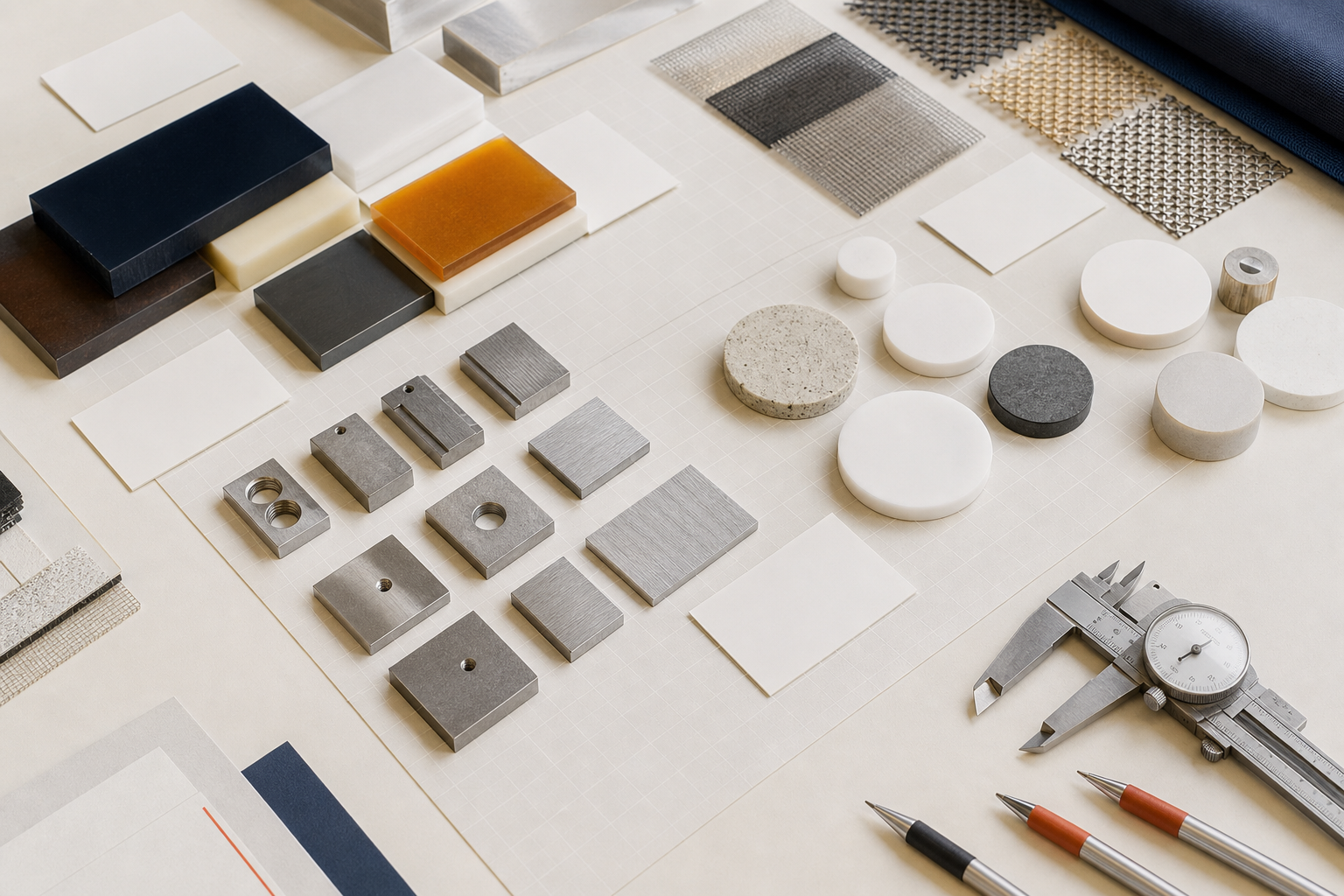 SPECIMEN ARCHIVE / ILLUSTRATIVE
Load, stiffness, impact and fatigue context
Wear, chemical, moisture and electrical exposure
Stock form, machining, molding and joining constraints
MATERIAL LENS / DEMO
Turn conditions into a shortlist.
ILLUSTRATIVE RANKING0181/100Evidence 0277/100Evidence 0375/100Evidence Scores are fictional UI behavior, not engineering recommendations.
CERAVA / C9-94
A fictional technical ceramic grade for wear interfaces, electrical isolation and stable high-temperature geometry.
AERION / A7-58
A fictional lightweight alloy grade balancing machinability, specific strength and protected-service durability.
THERMA / PX-620
A fictional high-temperature polymer grade for dimensionally stable, electrically insulating components.
MATERIAL FAMILIES / 02Compare distinct behavior,
Compare distinct behavior,
not interchangeable labels.
Each family connects a tactile material story to normalized property records and a documented evidence boundary.
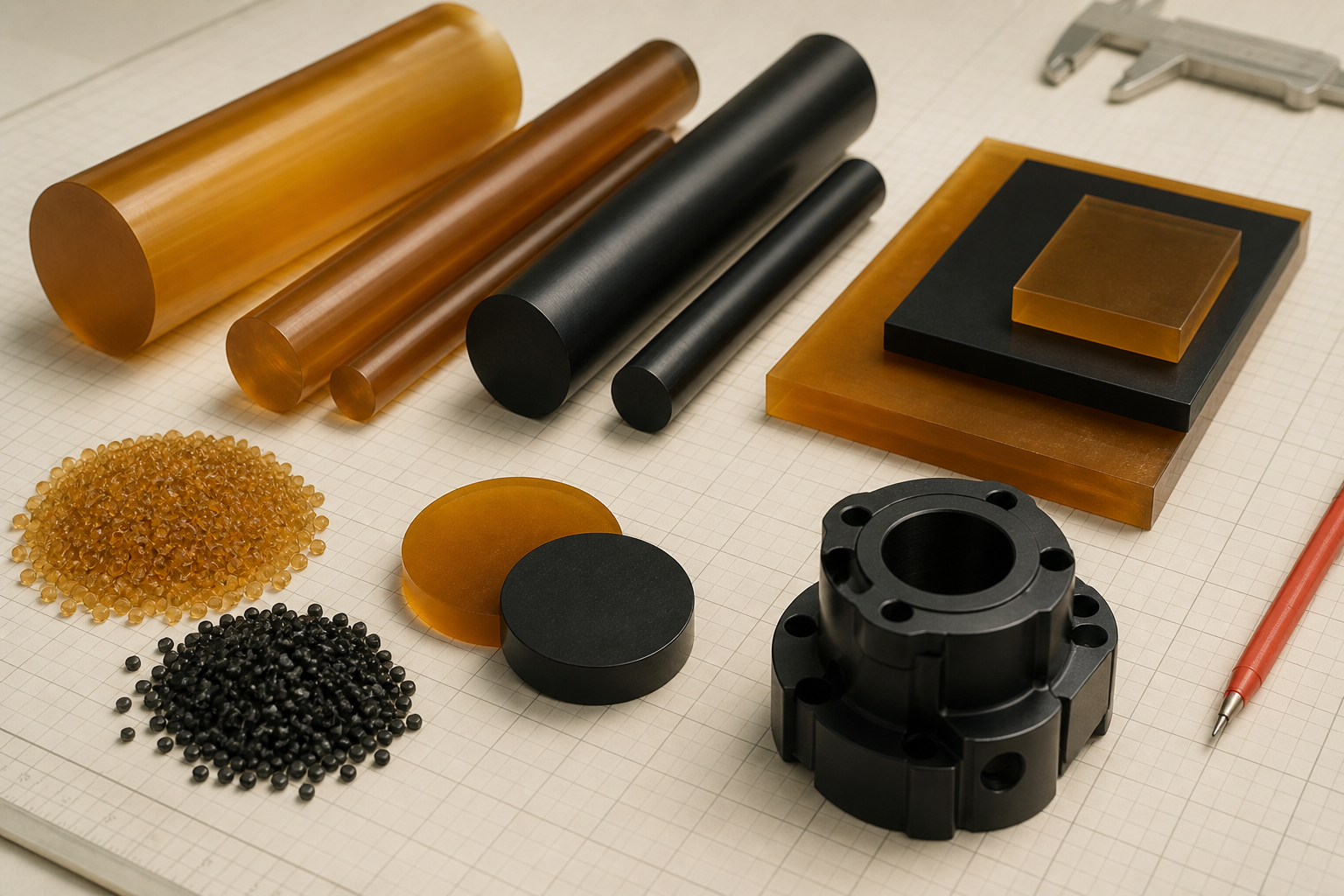
Thermal, wear and chemical-resistance concepts spanning stock shapes and engineered components.
- Service temperature
- Illustrative 240 °C
- Tensile modulus
- Demo 3.6 GPa
- Density
- Demo 1.31 g/cm³
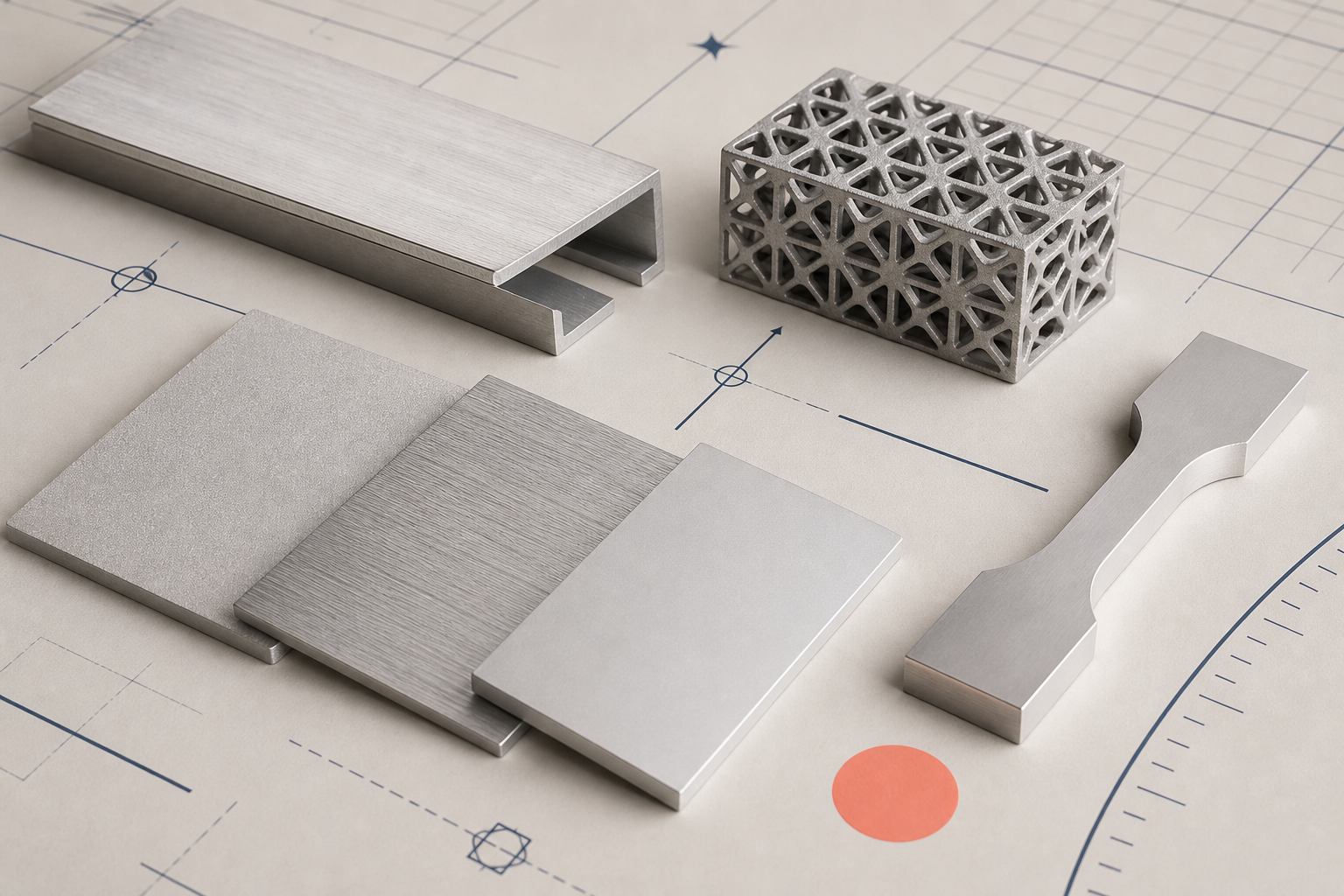
Low-mass metallic concepts organized around strength, process route and environmental exposure.
- Yield strength
- Illustrative 410 MPa
- Density
- Demo 2.72 g/cm³
- Elongation
- Demo 11%
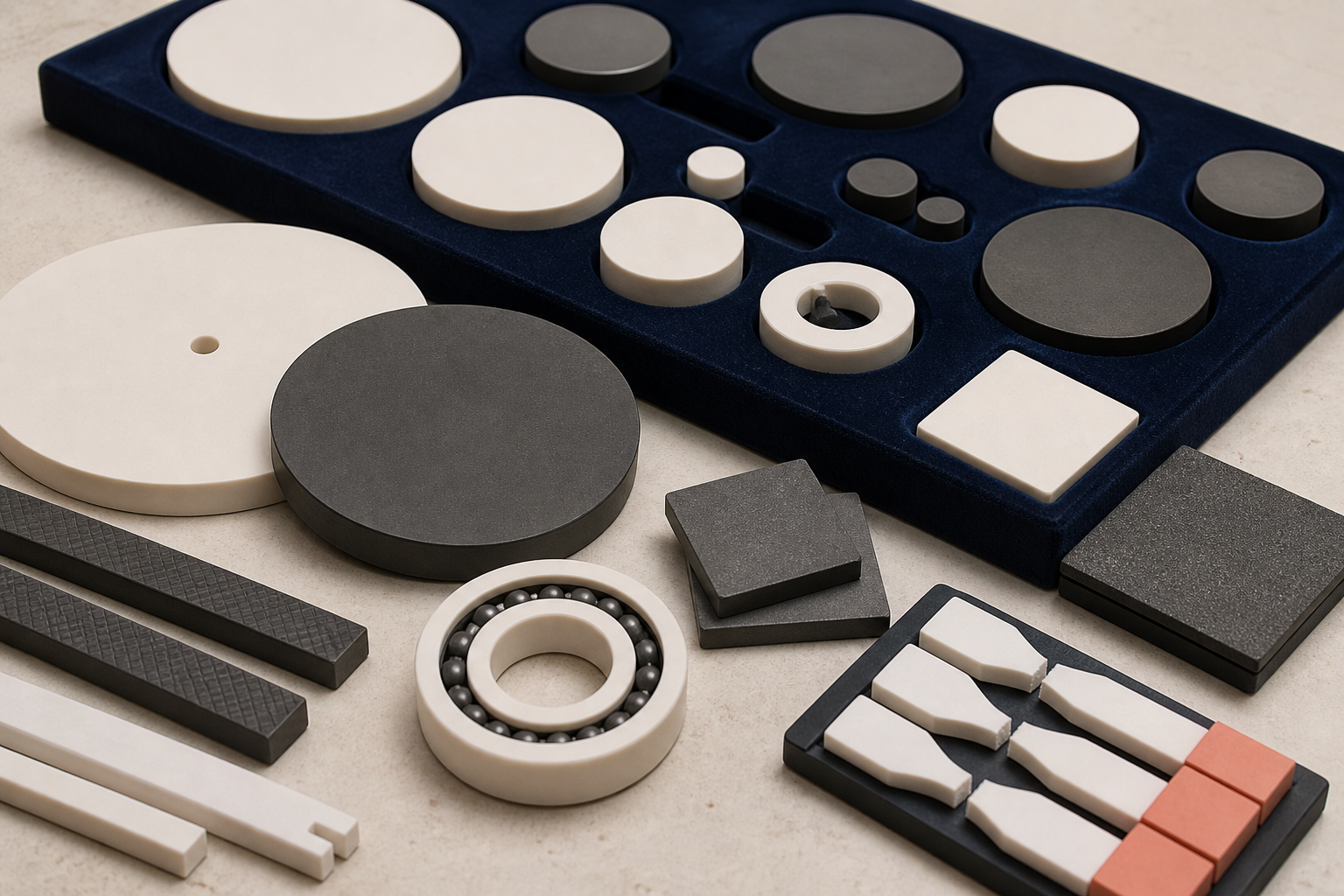
Wear, electrical and thermal-management concepts for demanding component environments.
- Hardness
- Illustrative 14 GPa
- Flexural strength
- Demo 330 MPa
- Density
- Demo 3.78 g/cm³
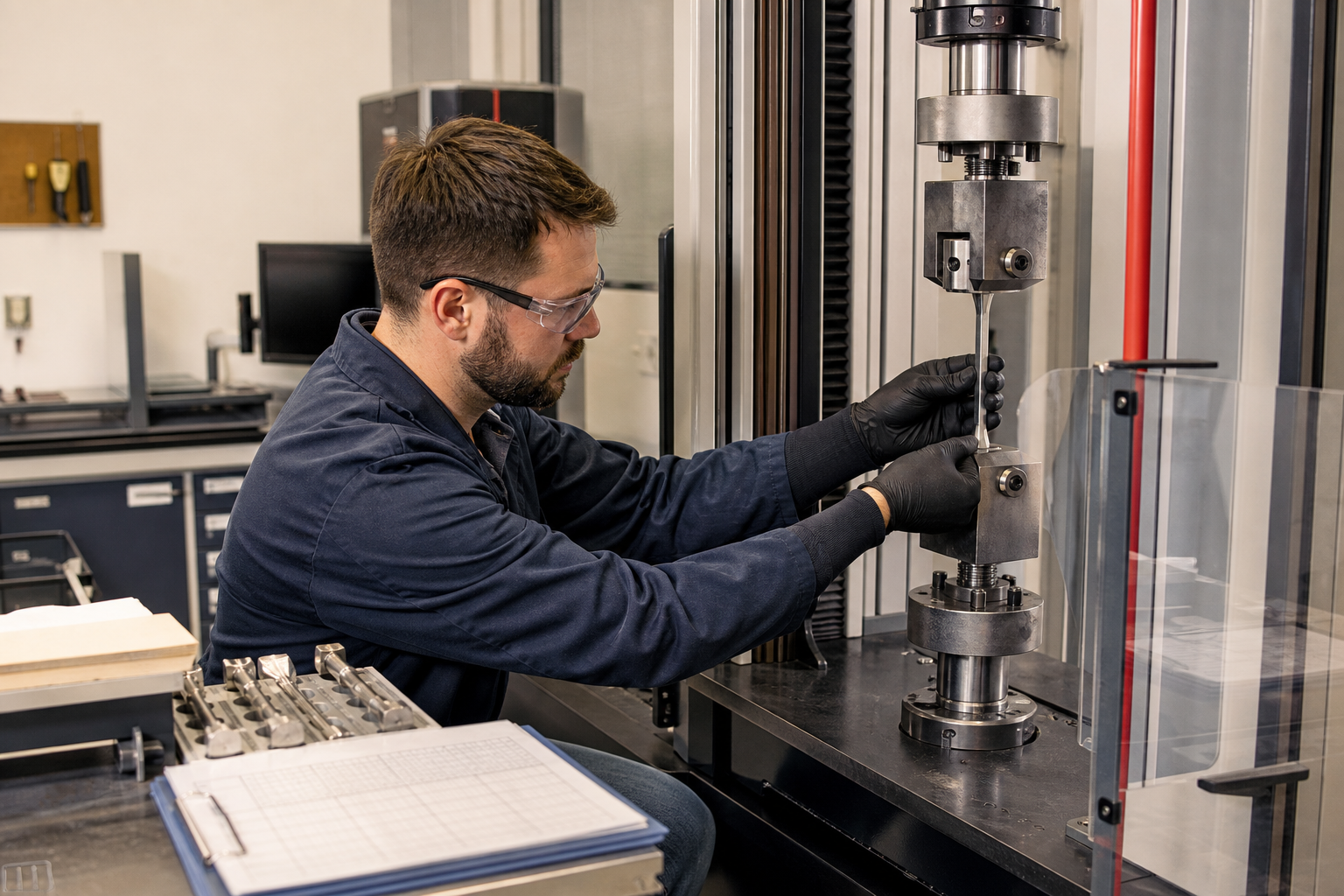
A number without a method is not evidence.
The production site should keep conditioning, orientation, units, test method and revision attached to every published property.
- Method and specimen context
- Visible revision ownership
- Demo claims kept separate from validation